Teeth Whitening
Everyone wants their teeth to be white. White teeth create a healthier and more aesthetic appearance. For this reason, many people use teeth whitening. In this way, the teeth become whiter.
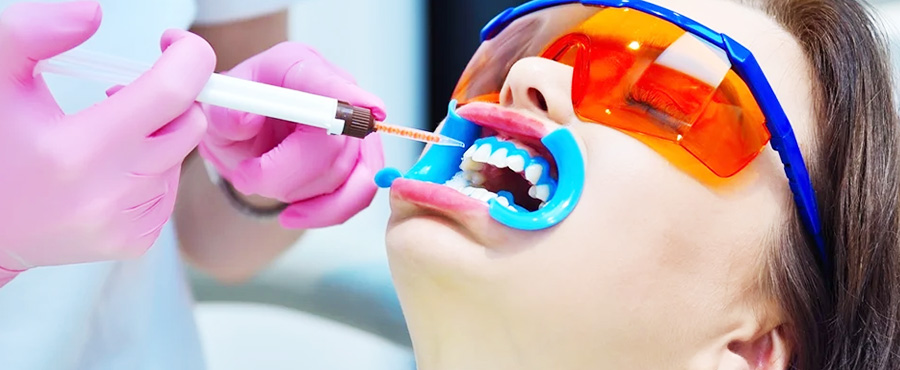
Over time, teeth can become yellow for various reasons. There are many causes for this. Primarily, patients’ dietary habits, genetic makeup, health conditions, and oral care routines allow the tooth color to change. Due to these factors, the teeth’s color changes and gradually becomes more yellow. In this case, the patient may feel that their aesthetic appearance and dental health have deteriorated. Therefore, applying teeth whitening treatment to achieve whiter teeth is definitely necessary.
How Is Teeth Whitening Treatment Performed?
First, there are two types of this method: at-home and in-office whitening. In both cases, the patient’s mouth is thoroughly examined. If there are no obstacles to the procedure, the type of whitening to be applied is decided. Then, the treatment begins.
In the at-home whitening method, the patient’s teeth are measured. Based on these measurements, trays that completely cover the teeth are prepared. Then, a specified amount of whitening gel is applied to these trays and placed on the teeth. Any gel spilling over the trays is wiped off with cotton to prevent damage to the teeth. The waiting period is approximately 5 to 7 hours.
In-office whitening is the most preferred method. To protect the gums from damage by the whitening agent, a protective gel is applied to the gums first. Then, the gel is activated using a light source. Afterward, whitening gel is applied to the front surfaces of the teeth and left for a certain period. The area is then illuminated. Depending on the desired level of whiteness by the patient, the sessions may be completed in several visits.
Who Can Get Teeth Whitening?
This process is suitable for all individuals who have completed their development, usually starting from age 18. Whitening is not directly applied to patients with cavities. Existing problems must be treated first, then whitening can begin. The procedure typically lasts between 60 and 90 minutes.
Is Teeth Whitening Painful?
Mild pain may occur during the procedure, but no other significant pain is observed. Also, slight sensitivity may be felt after the treatment. If applied to uncontrolled or eroded damaged enamel, it can become a painful procedure and may harm the teeth. The enamel layer is known as the outermost protective layer of the tooth. If this layer’s integrity is compromised, whitening should not be applied.
What Should Be Considered After Teeth Whitening?
After whitening, foods containing staining substances should be avoided for a few days. It is recommended to avoid acidic foods and drinks for several days following the procedure. Additionally, teeth should not be brushed harshly during this period. A soft-bristled toothbrush should be used as much as possible.
If sensitivity occurs, it is recommended to use toothpaste designed for sensitive teeth. Depending on the condition of the teeth after whitening, fluoride treatment may also be applied. Furthermore, if a whitening toothpaste is to be used as an auxiliary product, it should be used once daily starting one week after the procedure.